Yes. I also corrected one terminology issue as I expanded it: a mandap is the ceremonial canopy or structure used in many Hindu weddings, while a mandir is a Hindu temple. I worked both naturally into the page rather than treating them as the same thing.
I also made the religious/community section broader without implying that all Indian or Pakistani families follow the same traditions. Charlotte’s South Asian community is very diverse, and that actually gives the page much more useful SEO depth.
Indian & Pakistani Weddings in Charlotte, NC
A Charlotte Guide to Desi Wedding Traditions, Hindu Mandaps, Sikh Anand Karaj, Muslim Nikah Ceremonies, Multi-Day Celebrations and Luxury Transportation
Indian and Pakistani weddings are among the most colorful, meaningful and elaborate celebrations held in Charlotte, bringing together generations of family members through traditions that may include religious ceremonies, music, dance, elaborate clothing, incredible food and several days of events. Although the word “Desi” is often used broadly to describe people and cultures connected to the Indian subcontinent, there is no single Indian or Pakistani wedding tradition, because customs can differ enormously according to religion, family history, language, region, ethnicity and personal preference.
A Hindu wedding in Charlotte may center around a beautifully decorated mandap and sacred fire ceremony, while a Sikh wedding may include an Anand Karaj at a local gurdwara. A Pakistani Muslim wedding may include a Nikah followed by a Barat and Walima, while another family may combine South Asian traditions with a Western ceremony and reception. Jain, Christian, interfaith and multicultural South Asian families may follow entirely different customs while still incorporating recognizable Desi elements such as Mehndi, music, colorful clothing, family processions and large receptions.
That diversity is increasingly visible throughout Greater Charlotte. What was once a relatively small South Asian community has grown into a substantial part of the region’s cultural landscape, with Hindu mandirs, Sikh gurdwaras, Sunni and Shia Muslim communities, Jain institutions, Indian and Pakistani cultural organizations, South Asian restaurants, grocery stores, dance schools and major annual festivals now spread across Charlotte, Matthews, Indian Trail, University City, Huntersville, Fort Mill and the surrounding Carolinas.
The growth has been dramatic enough to show up in both community estimates and census-related data. WFAE reported as far back as 2018 that Charlotte’s Asian Indian population had more than doubled since 2010 and exceeded 20,000 people at that time. More recent American Community Survey-derived data cited by North Carolina listed approximately 27,480 Asian Indian residents in Mecklenburg County alone, while the India Association of Charlotte uses a broader regional definition and estimates that the greater Charlotte area now serves approximately 40,000 to 50,000 Indian Americans. Those figures measure somewhat different populations and geographic areas, but together they illustrate how significantly the community has grown. (WFAE)
Charlotte’s Pakistani-American community has also developed its own visible cultural institutions and events. The Pakistani American Community of the Carolinas works to connect Pakistani Americans throughout the region while promoting Pakistani culture and heritage to the broader community, and in August 2026 the organization held its Pakistan Day Mela in Charlotte. UNC Charlotte also has an active Pakistani Student Association focused on Pakistani culture, community and helping international Pakistani students become connected with the university and surrounding area. (PAC of the Carolinas)
For couples planning an Indian or Pakistani wedding in Charlotte, this growth means the region now offers much more than conventional ballrooms and American wedding venues. Families can find temples, mosques, gurdwaras, cultural halls, South Asian banquet spaces, Indian catering, specialized decorators, DJs familiar with Bollywood and Punjabi music, Mehndi artists, traditional clothing and jewelry, photographers familiar with multi-day celebrations and transportation capable of supporting guests moving between hotels, religious ceremonies, airports and receptions.
At 1776CLT, we understand that this style of wedding often involves considerably more transportation coordination than a single ceremony followed by a reception. Family members may begin arriving at Charlotte Douglas International Airport several days before the wedding, grandparents and relatives may need transportation between hotels and religious venues, the bride and groom may need private transportation at different times, and the wedding weekend may include Mehndi, Haldi, Sangeet, Nikah, Anand Karaj, Baraat, reception and Walima events at completely different locations.
Since 1994, we have provided chauffeured transportation throughout Greater Charlotte, and our goal with Indian and Pakistani weddings is not to interfere with the traditions that make each celebration unique, but to understand the schedule, respect the family’s customs and help keep transportation organized across what can become an extremely busy several days.
Charlotte’s South Asian Community Has Become Part of the Identity of the Region
The growth of Charlotte’s Desi community is visible well beyond weddings. Indian and Pakistani families have helped build a network of religious, cultural and social organizations that did not exist at anything close to today’s scale several decades ago.
The India Association of Charlotte traces its beginnings to the mid-1990s, when the city had a much smaller Indian population. The organization was created to bring people of Indian origin together, preserve Indian cultural heritage and help the wider Charlotte community understand India’s extraordinary regional, linguistic and religious diversity. Today, that organization is responsible for one of Charlotte’s major annual cultural events, the Festival of India. (India Association of Charlotte –)
The growth can also be seen in Charlotte’s religious infrastructure. The Hindu Center of Charlotte began with a relatively small group of families in the early 1980s and now describes itself as serving thousands of devotees from across the Carolinas. BAPS has expanded its Charlotte-area presence as its congregation has grown, including a major new mandir project in Matthews whose foundation stone was ceremonially laid in May 2026. Charlotte also has a substantial Sikh congregation, Jain community, numerous Muslim masjids and a dedicated Shia community.
For couples getting married here today, this community infrastructure matters because a Charlotte Desi wedding no longer has to be constructed as though the city has no familiarity with South Asian traditions. Couples can hold religious ceremonies within their own faith communities and then move to hotels, banquet halls or event spaces for larger celebrations while using local vendors who understand the flow of multi-day Indian and Pakistani weddings.
Charlotte’s Festival of India and a Growing Calendar of Desi Celebrations
One of the clearest signs of Charlotte’s growing Indian community is the annual Festival of India, organized by the India Association of Charlotte. In September 2026, the festival celebrated its 30th annual edition in Uptown Charlotte, with Indian music, classical and contemporary dance, food, fashion, art, traditional crafts and cultural demonstrations presented to the wider community. Performances have included Indian classical traditions such as Bharatanatyam, Kuchipudi, Kathak and Odissi alongside folk dancing, Bollywood entertainment and traditional musical instruments. (AsiaCarolinas)
The significance of the festival goes beyond entertainment because an event that has survived and grown for three decades reflects the permanence of Charlotte’s Indian-American community. Weddings take place within that same cultural ecosystem, supported by dance schools, musicians, decorators, caterers, religious institutions, fashion businesses and families who have now lived in the Carolinas for multiple generations.
Diwali has also become increasingly visible throughout the Charlotte region. Local celebrations have been held by religious institutions, Mecklenburg County facilities and community organizations, while the 2026 calendar includes a Lake Norman Diwali celebration in Huntersville featuring cultural performances, traditional clothing, food, family activities and a large diya-lighting ceremony. Charlotte’s interfaith calendar lists Diwali on November 8, 2026. (Charlotte On The Cheap)
Navratri and Garba celebrations, Ganesh Chaturthi, Janmashtami, Dussehra, Durga Puja and other Hindu observances are also increasingly visible in the area. Trimurti Temple Devasthanam’s 2026 calendar alone includes Ganesh Chaturthi, Navaratri, Deepavali and numerous recurring pujas and abhishekams, illustrating how extensive Charlotte’s Hindu cultural calendar has become. (Trimurti Temple)
Charlotte’s Pakistani community has developed its own cultural calendar as well. The Pakistani American Community of the Carolinas organizes events including Pakistan Day Mela, with the organization describing its mission as strengthening the Pakistani-American community while sharing Pakistani culture and heritage with the broader Carolinas. (PAC of the Carolinas)
These celebrations matter to a wedding page because they demonstrate something larger about Charlotte: Indian and Pakistani weddings are not isolated cultural events occurring in a city unfamiliar with them. They are increasingly part of a large and established South Asian community that has become woven into the cultural life of the Queen City.
Hindu Weddings in Charlotte
A Hindu wedding can vary substantially depending on whether the families have Gujarati, Punjabi, Telugu, Tamil, Bengali, Marathi, Rajasthani, North Indian, South Indian or other regional backgrounds, and even two families from the same region may follow different customs. Some celebrations are highly traditional, while others incorporate Western wedding traditions or combine two different cultural backgrounds into a single weekend.
One of the most recognizable features of many Hindu weddings is the mandap, the decorated ceremonial structure beneath which many of the central wedding rituals take place. The mandap should not be confused with a mandir, which is a Hindu temple. In Charlotte, a couple might marry beneath an elaborate temporary mandap constructed inside a hotel ballroom or event venue, while another family might hold religious portions of the wedding within a local mandir or temple complex.
Depending on family tradition, the ceremony may include the arrival of the groom and Baraat, exchange of garlands known as Jai Mala or Varmala, Kanyadaan, rituals involving the sacred fire, Mangal Phera or other rounds around the fire, and Saptapadi, commonly known as the Seven Steps. The precise order and meaning of ceremonies can vary, which is why wedding professionals should never assume that every Indian wedding follows an identical schedule.
The Mehndi Celebration
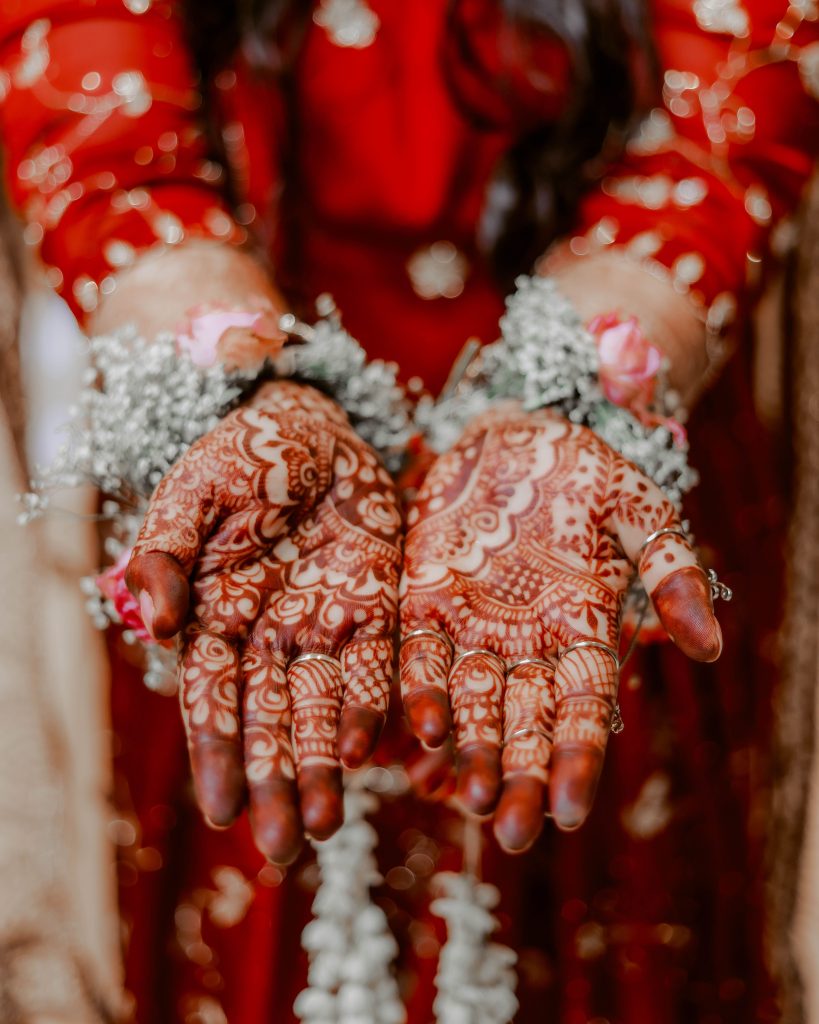
The Mehndi ceremony is one of the most familiar South Asian wedding traditions and often becomes a major social event of its own. Intricate henna designs are applied to the bride’s hands and feet while friends and family gather for music, food, conversation and celebration.
Some families hold Mehndi at a private residence, while others use banquet halls, hotel function rooms or dedicated event venues, particularly when many out-of-town relatives are attending. Transportation planning can become important at this stage because the wedding party may already be divided among several hotels and homes even though the main wedding ceremony is still a day or two away.
Pakistani families also commonly incorporate Mehndi celebrations, although traditions differ according to region and individual family customs. Music, colorful clothing and family participation often make the event one of the most energetic parts of the wedding week.
The Haldi Ceremony
The Haldi ceremony traditionally involves applying a turmeric-based mixture to the bride or groom as family members offer blessings before marriage. Depending on the family, separate Haldi events may be held for the bride and groom, sometimes at different homes or venues.
The atmosphere is often joyful, informal and extremely colorful, with family members participating directly in the ceremony. Because Haldi may occur during the morning or afternoon before another major event that evening, transportation schedules can become surprisingly tight, especially when the bride, groom and extended families are staying in different parts of Charlotte.
Sangeet, Garba and Family Performances
The Sangeet is often one of the largest celebrations before the wedding itself, with both families gathering for music, choreographed dance performances, dinner and entertainment. Relatives may spend weeks or months preparing performances, and the evening can feel more like a major production than a conventional rehearsal dinner.
Depending upon cultural background, the weekend may also include Garba or Raas, particularly for Gujarati families. The music, dancing and participation of relatives from multiple generations make these celebrations especially memorable, while large guest counts mean families frequently choose ballrooms or banquet facilities capable of supporting substantial audiovisual equipment, stages and dance floors.
Because Sangeet events frequently run late, families coordinating transportation should plan for staggered departure times rather than assuming hundreds of guests will all leave simultaneously.
The Baraat
The Baraat is one of the most visually dramatic portions of many North Indian and Pakistani wedding celebrations. Traditionally associated with the groom’s arrival, it may involve dancing, drums, music and a procession of relatives and friends leading toward the ceremony venue.
In Charlotte, Baraats may take place outside hotels, banquet halls or other wedding venues, with the groom arriving in an exotic vehicle, luxury vehicle, horse or another form of ceremonial transportation depending on the family’s plans and venue rules.
Transportation providers should understand that a Baraat is not simply an ordinary vehicle arrival at a curb. Timing, staging and coordination with the venue, wedding planner and other vendors may be important, particularly when the procession occupies a hotel entrance or designated outdoor space.
Sikh Weddings and Anand Karaj in Charlotte
Sikh weddings center around the Anand Karaj, the Sikh marriage ceremony performed in the presence of the Guru Granth Sahib. The ceremony emphasizes a spiritual union rather than simply a contractual or social relationship and traditionally includes the couple walking around the Guru Granth Sahib during the four Laavan.
Charlotte has an established Sikh community centered in part around Gurdwara Sahib Charlotte, which was established through the Sikh Heritage Society of Greater Charlotte. The organization traces its roots to 2001, with the congregation initially gathering in homes before establishing a permanent gurdwara. Today it serves Greater Charlotte’s Sikh community through worship, community gatherings and preservation of Sikh traditions. (Gurdwara Sahib Charlotte)
Official site: Gurdwara Sahib Charlotte
Gurdwara Sahib Charlotte is located in the University City area at 5715 University City Boulevard, making it relatively accessible to hotels around University City, Concord and Uptown Charlotte. Families holding an Anand Karaj should coordinate directly with the gurdwara regarding ceremony requirements, etiquette, food, photography, clothing and scheduling rather than relying on general assumptions about Sikh weddings. Transportation surrounding an Anand Karaj can involve more than simply the bride and groom because grandparents, visiting relatives and other family members may need transportation from area hotels to the gurdwara before moving later in the day to a separate reception venue.
Hindu Center of Charlotte
The Hindu Center of Charlotte, located at 7400 City View Drive, is one of the most established Hindu institutions in the region and describes itself as a spiritual center serving the greater Charlotte Hindu community through worship, religious services, education, cultural events and community programs. The center began in the early 1980s and has expanded substantially as Charlotte’s Hindu population has grown. Its current priest information specifically includes priests who perform weddings and other life-event ceremonies.
Official site: Hindu Center of Charlotte
The Hindu Center campus has also become a major cultural gathering place in Charlotte. Vihar Hall has hosted community celebrations, religious gatherings, cultural performances and Diwali events, and reporting on the center’s expansion describes the campus growing from a small original temple into a much larger complex that includes Vihar Hall and additional facilities. For wedding families, the Hindu Center is particularly significant because it represents more than simply a religious building. It has become one of the major anchors of Charlotte’s Hindu community and a familiar gathering point for families with roots throughout India.
BAPS Shri Swaminarayan Mandir in Matthews
The BAPS Shri Swaminarayan Mandir, located at 4100 Margaret Wallace Road in Matthews, serves members of the BAPS Swaminarayan Hindu community in Greater Charlotte. BAPS describes its mandirs as places for worship, spiritual development, community, cultural education and preservation of Hindu values. (BAPS Swaminarayan Sanstha)
Official site: BAPS Shri Swaminarayan Mandir Charlotte
The growth of the Charlotte BAPS community has been significant enough to require expanded facilities. BAPS held a Vedic groundbreaking ceremony for a new Charlotte-area mandir in 2024, explaining that the existing facilities had become insufficient for the expanding religious, social and cultural needs of the local Hindu-American community. The foundation stone for the new mandir was ceremonially laid in Matthews on May 31, 2026. (BAPS Swaminarayan Sanstha)
That continuing expansion is another visible indicator of how much Charlotte’s South Asian population has changed over the last generation.
Trimurti Temple Devasthanam
Trimurti Temple Devasthanam, located on Beatties Ford Road in Charlotte, is a traditional South Indian Hindu temple established as a foundation in 2000. The temple describes its mission as creating a traditional temple in the South Indian architectural tradition and today includes numerous sannidhis dedicated to Hindu deities including Brahma, Vishnu, Shiva, Saraswathi, Mahalakshmi, Parvathi, Durga, Ganesha, Hanuman and others. (Trimurti Temple)
Official site: Trimurti Temple Devasthanam
For South Indian families planning celebrations in Charlotte, Trimurti Temple represents another important spiritual and cultural institution. Its calendar includes recurring pujas and major Hindu observances throughout the year, including Ganesh Chaturthi, Navaratri and Deepavali. (Trimurti Temple)
Shirdi Sai Temple of Charlotte
The Shirdi Sai Temple of Charlotte is located in Indian Trail, east of Charlotte, and provides another spiritual home for members of the region’s Hindu community. The temple maintains regular aarti schedules, religious programs and special observances throughout the year. (Charlotte SAI)
Official site: Shirdi Sai Temple of Charlotte
Its Indian Trail location is also important from a transportation standpoint because a family may have guests staying closer to Uptown Charlotte or Charlotte Douglas International Airport while ceremonies or religious visits take place considerably farther east. Multi-location wedding transportation should therefore account for Charlotte-area traffic and actual travel time rather than simply looking at distances on a map.
Jain Center of Greater Charlotte
Charlotte’s South Asian community also includes a well-established Jain population. The Jain Center of Greater Charlotte, located at 7631 Mallard Creek Road, describes its mission as serving the spiritual, cultural, social and community needs of Jain families throughout metropolitan Charlotte. (Jain Center of Greater Charlotte)
Official site: Jain Center of Greater Charlotte
Jain weddings have their own religious and family traditions and should not simply be grouped into Hindu wedding customs because the faith, rituals and symbolism are distinct. Families planning a Jain ceremony should work directly with their religious leaders and wedding professionals to develop the appropriate schedule while transportation providers focus on the logistics of moving guests respectfully and on time.
Pakistani Muslim Weddings in Charlotte
Pakistani weddings can vary tremendously according to family background, whether the family has roots in Punjab, Sindh, Kashmir, Khyber Pakhtunkhwa, Balochistan or elsewhere, as well as according to religious practice and how long the family has lived in the United States. A Charlotte Pakistani wedding may be deeply traditional, strongly American-influenced or an intentional combination of both.
Many Pakistani Muslim weddings unfold across several events rather than a single ceremony, and common celebrations may include Dholki gatherings, Mehndi, Nikah, Barat and Walima. Some families also hold Mayun, engagement gatherings, family dinners or additional celebrations surrounding the main wedding. The terminology and sequence should never be assumed to be identical from one family to another because families may omit events, combine events or use different regional names.
Dholki
A Dholki gathering traditionally brings relatives and friends together for music and singing in advance of the wedding. The event may be relatively intimate compared with the eventual reception, although large families can turn even an informal Dholki into a substantial gathering. For visiting family members, these early wedding events may occur several days before the formal ceremony, which is one reason Pakistani wedding transportation sometimes begins long before the official wedding day.
Nikah
The Nikah is the Islamic marriage contract and religious ceremony, and it may be performed at a masjid, banquet venue, private home or another appropriate location depending upon the family and religious leader. Because Pakistani Muslim families in Charlotte may be Sunni or Shia and may follow different cultural and religious practices, transportation providers and other wedding vendors should not assume that one mosque, ceremony style or schedule represents every Muslim wedding. The family’s imam, masjid or religious community should always be the source for questions involving the actual religious requirements of the Nikah.
Barat and Rukhsati
The Barat is traditionally associated with the groom’s wedding party and the arrival of his family for the main wedding celebration. Depending upon the family, it can include a formal arrival, music, elaborate clothing and a large evening reception. Rukhsati traditionally marks the bride’s departure with her husband and is often one of the most emotional moments of the celebration. For transportation planning, this moment can be particularly important because the couple may want a dedicated getaway vehicle waiting separately from guest transportation. A clean chauffeured SUV can work particularly well for this portion of the evening because elaborate wedding clothing can require more space than ordinary formal attire, and couples often appreciate privacy after several hours of ceremonies and celebration.
Walima
The Walima is the marriage banquet or reception traditionally associated with the groom’s family and may take place the following day or at another time chosen by the families. It can be every bit as formal and elaborate as the preceding wedding events, particularly when hundreds of relatives, friends and members of the community are invited. From a transportation perspective, the Walima means the wedding schedule may continue for another full day even after guests unfamiliar with Pakistani weddings assume the celebration has ended.
Sunni Muslim Communities in Charlotte
Charlotte has numerous Muslim communities serving families from across the world, including significant participation from South Asian families. The Islamic Center of Charlotte, established in 1988, describes itself as Charlotte’s first Muslim community center and operates as a religious, educational and cultural hub with daily prayers, Friday Jumu’ah, Quran and Arabic education, youth programs and marriage services. Its official materials emphasize religious programming grounded in the Quran and Sunnah, while local mosque directories identify it within the Sunni tradition. (ICCharlotte)
Official site: Islamic Center of Charlotte
For Pakistani and other Muslim families planning a Nikah, the Islamic Center of Charlotte is one of the area institutions worth contacting directly regarding religious services, scheduling and current marriage requirements.
Masjid Ash-Shaheed, located on West Sugar Creek Road, is another long-established Charlotte Muslim institution. Its community history dates to the late 1980s, and the current masjid and community center opened on its present campus in 2006. The organization describes its religious direction as following the Qur’an and the life example of Prophet Muhammad.
Official site: Masjid Ash-Shaheed
Charlotte has additional Sunni mosques and Islamic organizations throughout the metropolitan area, so families should choose the community that reflects their own religious relationships and practices rather than assuming proximity alone determines where a Nikah should take place.
Charlotte’s Shia Muslim Community and Al-Zahra Islamic Center
Charlotte also has an established Shia Muslim community. The Shia Islamic Community of the Carolinas, associated with Al-Zahra Islamic Center on Monroe Road, serves the region’s Shia community, and directories of Shia Islamic institutions identify the Charlotte organization as part of the Shia network in North Carolina. (ieciz.org)
Official site: Shia Islamic Community of the Carolinas / Al-Zahra Islamic Center
Al-Zahra is particularly relevant when discussing Pakistani weddings because Pakistan has substantial Shia communities alongside its Sunni majority, and Charlotte wedding planning should not assume that every Pakistani Muslim family follows the same religious tradition.
A Shia Nikah, Majlis-connected family tradition or other wedding-related religious observance should be coordinated with the family’s own religious leaders. From the transportation side, what matters is understanding the correct locations, times and family priorities without trying to generalize religious practices that vary from one community to another.
Charlotte Has Become a Destination for Large Desi Weddings
Charlotte is increasingly well suited for multi-day South Asian weddings because the city combines a major international airport, a large hotel inventory, numerous religious communities and a growing collection of event venues capable of handling large celebrations.
Charlotte Douglas International Airport is particularly important because Indian and Pakistani weddings frequently bring relatives from across the United States as well as guests arriving internationally. Some families may have relatives arriving from India or Pakistan directly through connecting gateways, while others arrive from major South Asian communities in New York, New Jersey, Chicago, Dallas, Houston, Atlanta, Toronto, Washington and other cities.
This can create a steady flow of airport arrivals during the days before a wedding. Instead of thinking of airport transportation as a single bride-and-groom transfer, families may need to coordinate grandparents on Wednesday, siblings on Thursday, cousins on Friday and additional VIP guests only hours before the first major event.
Charlotte Event Spaces for Large Indian and Pakistani Weddings
Large guest counts often require venues capable of supporting substantial catering, audiovisual production, stages, dance floors and elaborate décor. South Asian weddings can also require considerable setup time because a ballroom that hosts a Sangeet one night may look completely different when transformed for a ceremony or reception the following day.
UTSAV Event Spaces is one local option with halls specifically designed for large events. Its current venue information describes several event spaces ranging from approximately 250 guests to spaces designed for more than 700, along with parking and kitchen support. (UTSAV Grocery, Events & Food Central)
Official site: UTSAV Event Spaces
The Orchid Banquet Hall is another Charlotte venue with multiple room sizes, bridal rooms, kitchen facilities and space for larger celebrations. The venue lists its largest room at a maximum occupancy of approximately 420, with smaller halls also available. (The Orchid)
Official site: The Orchid Banquet Hall
Charlotte’s major Uptown, SouthPark, University City and Ballantyne hotels can also be appropriate for South Asian weddings, particularly when families want guest rooms, meeting spaces and wedding events concentrated within one property. Couples may consider properties such as The Ritz-Carlton Charlotte, Grand Bohemian Hotel Charlotte, The Ballantyne, Le Méridien Charlotte and other full-service hotels, although capacity, outside catering rules, open-flame policies, Baraat arrangements and other requirements should always be confirmed directly with the venue.
Why Outside Catering and Ceremony Requirements Matter
Indian and Pakistani weddings often require things that an ordinary ballroom wedding does not, which is why couples should discuss cultural requirements before signing a venue contract.
A Hindu ceremony may involve a mandap, sacred fire and specialized priest requirements. A Muslim wedding may require suitable arrangements for a Nikah, prayer or halal catering. A Sikh family may hold the religious ceremony at the gurdwara and use a separate ballroom only for the reception. A Jain family may have specific dietary and religious requirements, while some Indian families require completely vegetarian food preparation.
The venue may also need to accommodate a horse or specialty vehicle for a Baraat, extensive floral installations, several wardrobe changes, elaborate stages or large quantities of food from outside caterers. None of these requirements should automatically be assumed to be permitted simply because a venue advertises itself as a wedding venue.
Transportation for a Three-, Four- or Five-Day Wedding
One of the biggest logistical differences between many conventional American weddings and Indian or Pakistani weddings is that transportation needs may continue for several consecutive days. The first transportation may occur when relatives begin arriving at Charlotte Douglas International Airport, followed by hotel transfers and transportation to family homes. Mehndi, Haldi, Dholki and Sangeet celebrations can then take place at different addresses before the wedding ceremony itself, followed by a reception, Walima or post-wedding events. For the family member trying to coordinate everything, the problem quickly becomes larger than simply ordering a vehicle for the bride and groom.
A well-planned transportation schedule can identify which relatives require airport pickup, which guests are staying at which hotels, who needs transportation to the mandir, masjid or gurdwara, which members of the wedding party need to arrive early, and which vehicle needs to remain available after an event ends.
Charlotte Douglas International Airport Transportation for Wedding Guests
CLT is one of the most important pieces of a Charlotte destination wedding because many guests may be visiting North Carolina for the first time.
For important family members, grandparents or guests unfamiliar with Charlotte Douglas, 1776CLT can provide prearranged Inside Meet & Greet service, where the chauffeur parks and meets the passenger inside Baggage Claim with a last-name sign before assisting with luggage and accompanying the guest to the vehicle. This can be especially useful when a family is trying to welcome elderly relatives or international visitors without sending someone away from the wedding preparations every time another flight lands. Flight information should be provided for airport reservations so arrivals can be monitored when schedules change.
Transportation for Parents and Grandparents
Indian and Pakistani weddings frequently bring several generations together, and older family members may require a different transportation plan from younger guests. A grandparent may not want to wait for a hotel shuttle, walk a long distance across a large parking lot or climb into a vehicle repeatedly while moving between events. Some relatives may also be unfamiliar with Charlotte and may not speak English comfortably.
Providing a dedicated chauffeur for parents, grandparents or respected elders can simplify the weekend considerably because those guests have one transportation arrangement rather than having to find a different ride before every event.
Transportation for the Bride and Groom
The bride and groom may need private transportation at several points during the wedding weekend rather than only at the end of the reception. A groom may require transportation before a Baraat while the bride is transported separately to the ceremony. The couple may then travel together after the ceremony, change clothing at a hotel and return for the reception before eventually leaving again late at night. For the final departure, 1776CLT can provide wedding getaway transportation in a chauffeured SUV, and arrangements can include a clean vehicle prepared for the couple, wedding signage when requested and red-carpet service when arranged in advance. Couples leaving for a honeymoon can also schedule transportation to Charlotte Douglas International Airport following the wedding weekend so the final transfer is already organized before the celebration begins.
Executive Van Transportation for Wedding Families
Our Executive Ford Transit passenger van can be particularly useful for Indian and Pakistani weddings because it provides substantially more passenger and luggage capacity than an ordinary passenger vehicle. It can be used for groups of relatives arriving together at CLT, members of the wedding party traveling between hotels and event locations, family groups going to religious ceremonies or guests who need transportation together rather than being split among numerous smaller vehicles. For a multi-day wedding, having a larger chauffeured vehicle available can also make communication easier because the planner or family is coordinating with one transportation provider instead of trying to keep track of several unrelated rides.
Child Car Seats for Families Attending Desi Weddings
Large Indian and Pakistani weddings often include children from several branches of the family, and visiting parents may already be traveling through the airport with substantial luggage.
1776CLT maintains six child restraints that can be requested in advance, including three convertible child car seats, a high-back seat with a five-point harness, a high-back booster and a backless booster. Multiple seats can be requested for the same transportation when the children meet the applicable requirements and the vehicle configuration allows them to be used appropriately. Families can also bring their own child car seats if they prefer. For Charlotte-area families departing for a destination wedding or vacation, arrangements can even be made in advance for us to store personal child seats while the family is away and return with them for the scheduled ride home. Our passenger vehicles are non-smoking, and requested child seats are cleaned and disinfected between reservations using methods appropriate for the particular seat and manufacturer instructions.
Respect for Religious and Cultural Traditions
A transportation company does not need to pretend to be an expert in every Hindu, Muslim, Sikh or Jain religious practice in order to serve a wedding properly, but it does need to listen. That distinction is important.
The bride’s family may use one name for an event while the groom’s family uses another. A ceremony that lasts one hour in one family may take considerably longer in another. Some families will be extremely traditional, while others will combine a Nikah or Hindu ceremony with an American-style reception. Some couples are interfaith, interracial or intercultural and intentionally incorporate traditions from both families. The proper approach is to learn the schedule created by the couple, wedding planner and family and then build transportation around that schedule rather than forcing the wedding into a standard transportation template.
Clothing and Vehicle Space Matter More Than People Realize
South Asian formal clothing can be elaborate, which matters when selecting wedding transportation. A heavily embellished lehenga, bridal saree, sherwani or other formal garment may require considerably more room than an ordinary cocktail dress or business suit. Large wedding parties also bring garment bags, jewelry cases, gifts and other items that take up additional vehicle space.
The bride and groom should not be squeezed into a vehicle simply because the passenger count technically fits. This is another reason full-size SUVs and executive vans can be valuable for Desi wedding transportation, where comfort and usable interior space may matter more than fitting the maximum legal number of passengers into the vehicle.
Large Amounts of Wedding Luggage
Desi weddings can generate extraordinary amounts of luggage, particularly when relatives arrive from another state or country carrying clothing for several formal events. A single guest might need a suitcase containing casual clothes plus separate outfits for Mehndi, Sangeet, ceremony and reception. Multiply that by an entire family and the luggage volume increases quickly.
Families arranging airport transfers should provide an accurate suitcase count rather than only the number of passengers so the correct vehicle can be assigned. An SUV that comfortably seats a family may not necessarily hold the same family plus eight large suitcases, carry-ons and garment bags.
Wedding Coordinators and Family Communication
Large Indian and Pakistani weddings often benefit from having one designated transportation contact. Instead of several relatives independently calling the chauffeur with conflicting instructions, one family member, wedding planner or coordinator can provide the primary schedule and communicate approved changes.
For multi-day weddings, this can be especially valuable because transportation times sometimes change as one event runs longer than expected or family members decide they need additional movement between locations. The objective should be flexibility without creating confusion.
Weddings in Charlotte, Matthews, Ballantyne, SouthPark, University City and Beyond
Charlotte’s South Asian community is no longer concentrated in one small part of the city. Indian and Pakistani families now live throughout the metro area, including Ballantyne, South Charlotte, Matthews, Indian Trail, Weddington, Waxhaw, University City, Concord, Huntersville, Fort Mill, Tega Cay and surrounding communities. That geographic spread means a wedding weekend can easily involve considerable driving. Guests might stay in Uptown Charlotte while a religious event takes place in Matthews, then attend a reception near Ballantyne before returning to the hotel late at night. Families should therefore consider actual drive times and Charlotte traffic when constructing the wedding timeline, particularly on weekdays and around major sporting events, concerts or other large events.
Indian and Pakistani Weddings Are Not One Tradition
Perhaps the most important thing to understand is that “Indian wedding” and “Pakistani wedding” are enormous categories.
India contains hundreds of languages, regional identities and cultural traditions, while Pakistan is similarly diverse. Religion adds another layer, with Hindu, Muslim, Sikh, Jain, Christian and interfaith families following different ceremonies. Within Islam, Sunni and Shia families may have different religious relationships and traditions, and even within the same denomination, cultural customs can vary considerably.
The Charlotte community reflects that diversity.
A Gujarati Hindu wedding at a hotel beneath an elaborate mandap can look completely different from a Punjabi Sikh Anand Karaj at Gurdwara Sahib Charlotte. A Pakistani Sunni Nikah followed by a large Walima may have a very different schedule from a Shia Pakistani family’s celebration associated with the local Al-Zahra community. A South Indian wedding may use customs and ceremonies that are unfamiliar to a North Indian family. None is more or less authentically Desi than another. They are different expressions of family, religion, heritage and community.
A Charlotte Wedding Community That Continues to Grow
When the India Association of Charlotte was formed in the 1990s, the community it served was dramatically smaller than it is today. Three decades later, Charlotte hosts a major Festival of India, multiple Hindu temples, a Sikh gurdwara, Jain center, numerous Muslim communities, Pakistani cultural organizations, Indian regional associations, large Diwali celebrations and an increasingly sophisticated ecosystem of South Asian wedding professionals. (India Association of Charlotte –)
That growth is visible in the weddings themselves.
Celebrations that once might have required families to bring specialized vendors from much larger metropolitan areas can increasingly be supported by businesses and community organizations already operating in the Carolinas. Charlotte is becoming not merely a city where Indian and Pakistani families happen to live, but a place where South Asian cultural life has developed its own permanent local identity.
For couples planning a wedding here, that means more choices, more culturally familiar services and more opportunities to create a celebration that honors family traditions without having to leave Charlotte.
Indian and Pakistani Wedding Transportation by 1776CLT
1776CLT provides prearranged chauffeured transportation for Indian and Pakistani weddings throughout Greater Charlotte, including airport transportation from Charlotte Douglas International Airport, hotel transfers, transportation to Hindu mandirs, Sikh gurdwaras and Muslim masjids, bride and groom transportation, wedding getaway service, transportation for parents and grandparents, executive van transportation for family groups and multi-day transportation arranged around Mehndi, Haldi, Sangeet, Nikah, Anand Karaj, Baraat, reception and Walima schedules.
Our vehicles are non-smoking and include full-size chauffeured SUVs and an Executive Ford Transit passenger van for larger groups. Families traveling with young children can reserve child car seats in advance, while airport guests can request curbside transportation or Inside Meet & Greet service at CLT.
We understand that the transportation schedule exists to support the wedding rather than become the center of it. Our responsibility is to arrive prepared, communicate clearly, respect the family’s customs and help people get where they need to be throughout a celebration that may span several days and numerous locations.
Whether the wedding includes a Hindu ceremony beneath a mandap, an Anand Karaj at a Charlotte gurdwara, a Muslim Nikah followed by Barat and Walima, a Jain ceremony, an interfaith celebration or an entirely unique combination created by the couple and their families, the transportation should feel organized, respectful and dependable from the first airport arrival until the last family member heads home.
اردو میں اہم معلومات | اہم نکات کا اردو خلاصہ
شارلٹ، نارتھ کیرولائنا میں انڈین اور پاکستانی کمیونٹی گزشتہ کئی دہائیوں کے دوران نمایاں طور پر بڑھی ہے، اور آج گریٹر شارلٹ میں ہندو مندر، سکھ گردوارے، سنی اور شیعہ مساجد، جین مذہبی مراکز، انڈین اور پاکستانی ثقافتی تنظیمیں اور بڑے سالانہ تہوار موجود ہیں۔ اسی بڑھتی ہوئی کمیونٹی کی وجہ سے شارلٹ اب انڈین اور پاکستانی شادیوں کے لیے ایک اہم مقام بنتا جا رہا ہے، جہاں خاندان مذہبی رسومات، مہندی، سنگیت، نکاح، بارات، ولیمہ، آنند کارج اور دیگر روایتی تقریبات مقامی طور پر منعقد کر سکتے ہیں۔
انڈین اور پاکستانی شادیوں کی کوئی ایک مخصوص شکل نہیں ہوتی کیونکہ ہر خاندان کی مذہبی، علاقائی اور ثقافتی روایات مختلف ہو سکتی ہیں۔ ہندو شادی میں منڈپ کے نیچے مذہبی رسومات ادا کی جا سکتی ہیں، سکھ شادی میں آنند کارج گردوارے میں منعقد ہو سکتا ہے، جبکہ پاکستانی مسلم شادی میں نکاح، بارات اور ولیمہ شامل ہو سکتے ہیں۔ سنی اور شیعہ خاندانوں کی مذہبی روایات میں بھی فرق ہو سکتا ہے، اس لیے ہر خاندان کی اپنی روایات اور مذہبی رہنمائی کا احترام ضروری ہے۔
1776CLT گریٹر شارلٹ میں انڈین اور پاکستانی شادیوں کے لیے پہلے سے بک کی گئی نجی اور پروفیشنل ٹرانسپورٹیشن فراہم کرتا ہے۔ ہماری خدمات میں Charlotte Douglas International Airport سے مہمانوں کی آمد و روانگی، ہوٹل ٹرانسفر، مندر، مسجد اور گردوارے تک سفر، دلہا اور دلہن کے لیے نجی گاڑی، والدین اور بزرگ مہمانوں کے لیے ٹرانسپورٹیشن، اور بڑے خاندانوں کے لیے Executive Ford Transit passenger van شامل ہیں۔
اگر خاندان کے افراد مختلف شہروں یا ممالک سے Charlotte Douglas International Airport پہنچ رہے ہوں تو ان کے لیے پہلے سے ایئرپورٹ ٹرانسپورٹیشن ترتیب دی جا سکتی ہے۔ Inside Meet & Greet سروس کے ذریعے ڈرائیور مسافر کو Baggage Claim کے اندر نام کے سائن کے ساتھ مل سکتا ہے اور سامان کے ساتھ مدد کر سکتا ہے، جو خاص طور پر بزرگ رشتہ داروں، بین الاقوامی مہمانوں اور ایسے افراد کے لیے مفید ہو سکتا ہے جو پہلی مرتبہ شارلٹ آ رہے ہوں۔
بچوں کے ساتھ سفر کرنے والے خاندانوں کے لیے 1776CLT کے پاس مختلف اقسام کی چھ child car seats اور booster seats دستیاب ہیں جنہیں پہلے سے ریزرو کیا جا سکتا ہے۔ والدین اپنی ذاتی car seats بھی لا سکتے ہیں۔ ہماری مسافر گاڑیاں non-smoking ہیں، اور پہلے سے درخواست کی گئی child seats کو ہر ریزرویشن کے درمیان مناسب طریقے سے صاف اور disinfect کیا جاتا ہے۔
ہمارا مقصد ہر شادی کی ثقافتی اور مذہبی روایات کا احترام کرتے ہوئے قابل اعتماد ٹرانسپورٹیشن فراہم کرنا ہے۔ چاہے تقریب ہندو منڈپ کے نیچے ہو، سکھ گردوارے میں آنند کارج ہو، مسجد میں نکاح ہو، پاکستانی بارات اور ولیمہ ہو، یا ایک جدید multicultural شادی ہو، ہم کوشش کرتے ہیں کہ خاندان اپنے اہم دنوں پر گاڑیوں، ایئرپورٹ پک اپ اور مہمانوں کی آمدورفت کی پریشانی کے بجائے اپنی تقریبات اور خاندان کے ساتھ وقت گزارنے پر توجہ دے سکیں۔